Flagships · case studies

gpu-fleet

Systems Replay
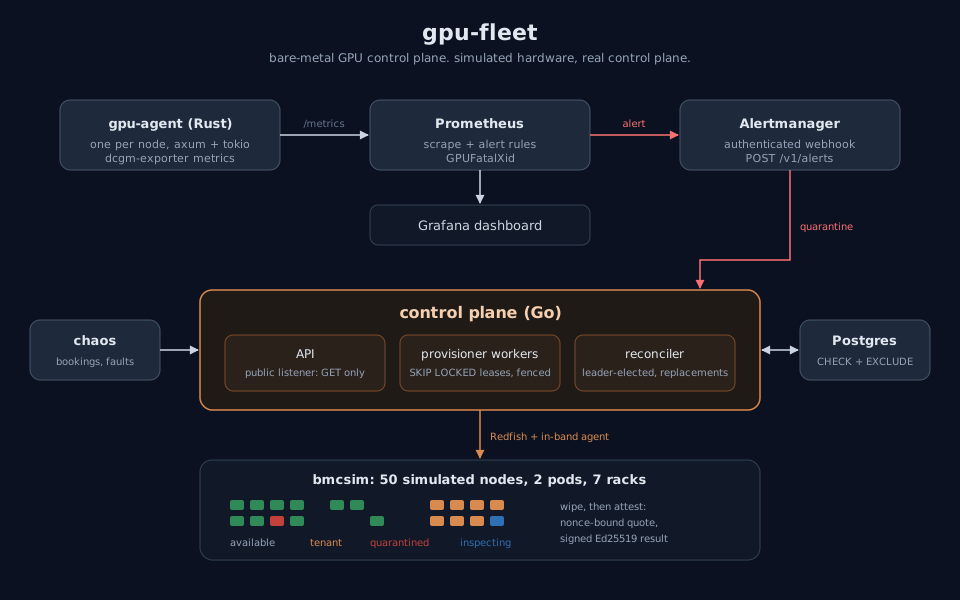
gpu-fleet architecture: Rust node agents, Go control plane, Postgres, Prometheus and Alertmanager

Control plane for bare-metal GPU clouds: node lifecycle over Redfish, topology-aware capacity reservations, tenant attestation and automated remediation. Go control plane, Rust node agent, Postgres. A chaos service keeps a 50-node simulated fleet breaking and healing itself, and the project page replays a simulated run in the browser.

Fault to quarantine in 88 s, replacement 2 s later

  • Go
  • Rust
  • PostgreSQL
  • Backend

EV Charging Optimizer

Systems Live
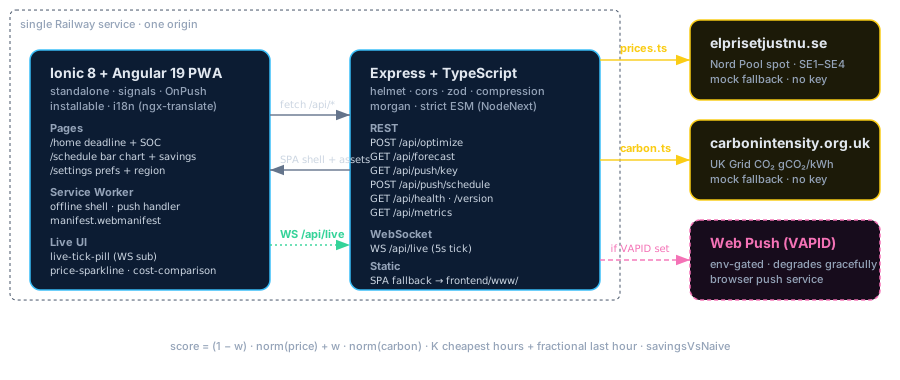
EV Charging Optimizer architecture: Ionic PWA over an Express API with Nord Pool and carbon feeds

Tells your EV when to charge. Picks hours by price + CO₂ score before your deadline, and proves the savings per request via savingsVsNaive.

Charges your EV by the grid, not the clock

  • TypeScript
  • Node.js
  • Express
  • Angular

GridSight

Systems Live
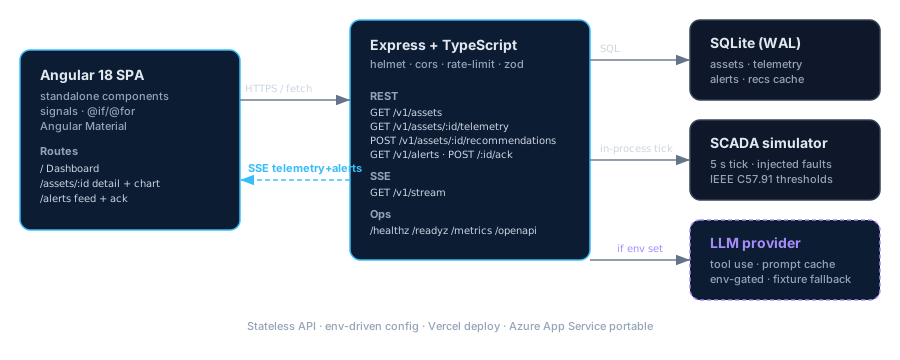
GridSight architecture: simulated SCADA telemetry, alert engine and recommendation endpoint

An Angular 18 dashboard for distribution-grid asset health: simulated SCADA telemetry from a fleet of substation transformers, threshold rules aligned to IEEE C57.91, real-time SSE updates, and LLM-powered maintenance recommendations. Demo serves hand-authored fixtures so the API key never leaves local dev. Flip one env var to run live against the model.

Env-gated LLM: schema tool use with a key, fixtures without, same contract

  • Angular
  • TypeScript
  • Node.js
  • Express

polyhook

Systems Replay
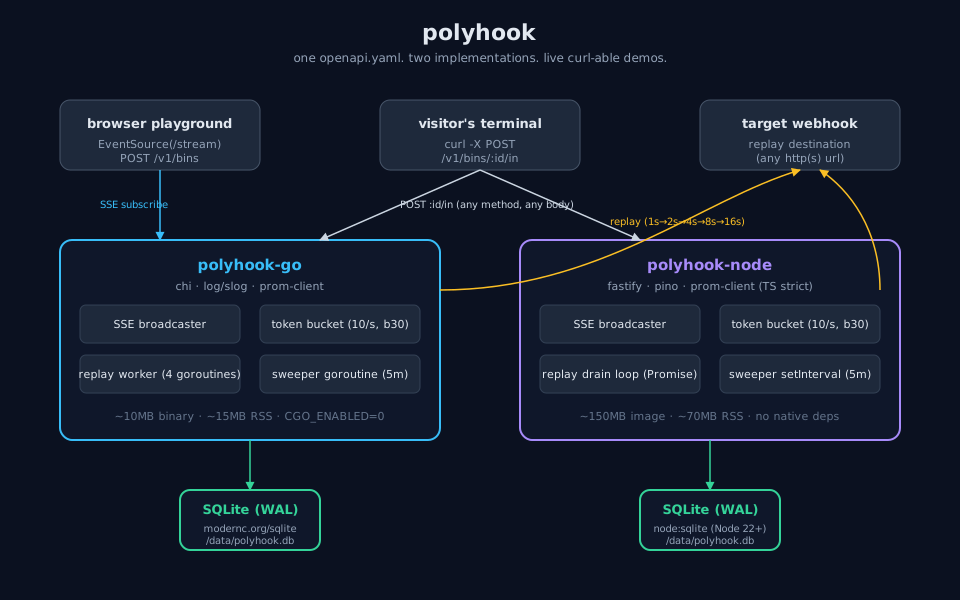
polyhook architecture: one SvelteKit frontend over a Go and a Node backend

Full-stack polyglot webhook bin: the same OpenAPI 3.1 API built twice (once in Go, once in Node) behind a single SvelteKit + Svelte 5 frontend on Vercel. Flip backends with a tab, create a bin, curl it, and watch requests land in real time over SSE. Side-by-side code panels make the runtime comparison the artifact.

Go vs Node, same OpenAPI 3.1 contract

  • Go
  • Node.js
  • TypeScript
  • Svelte

More builds · services and tools

tinybus

Systems Live
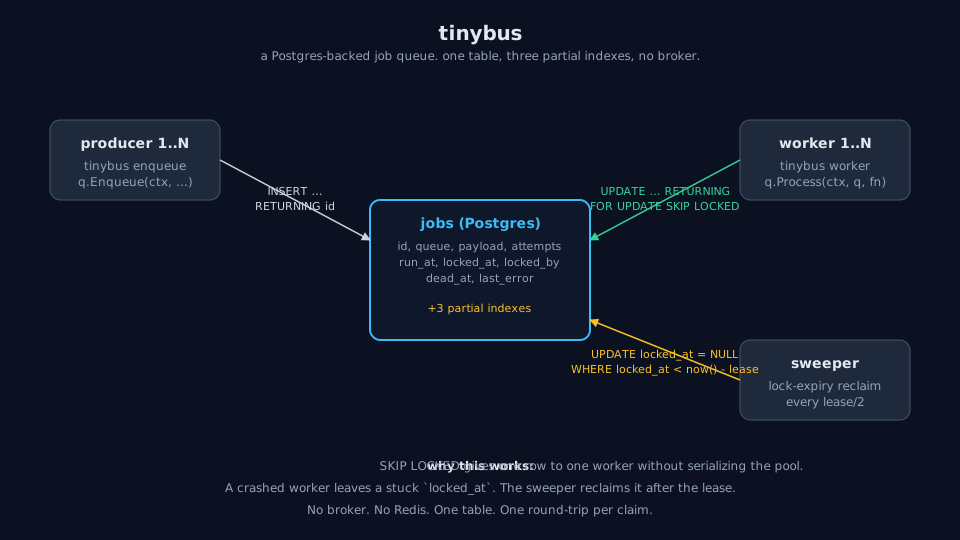
tinybus architecture diagram

A durable job queue for Go, backed by Postgres. Single binary, no broker, crash-safe via SELECT … FOR UPDATE SKIP LOCKED. The sibling project to collab-board: where collab-board nails real-time concurrency, tinybus nails the SQL-design half of backend engineering: schema, partial indexes, transactional claim, lease-based crash recovery.

collab-board

Systems Live
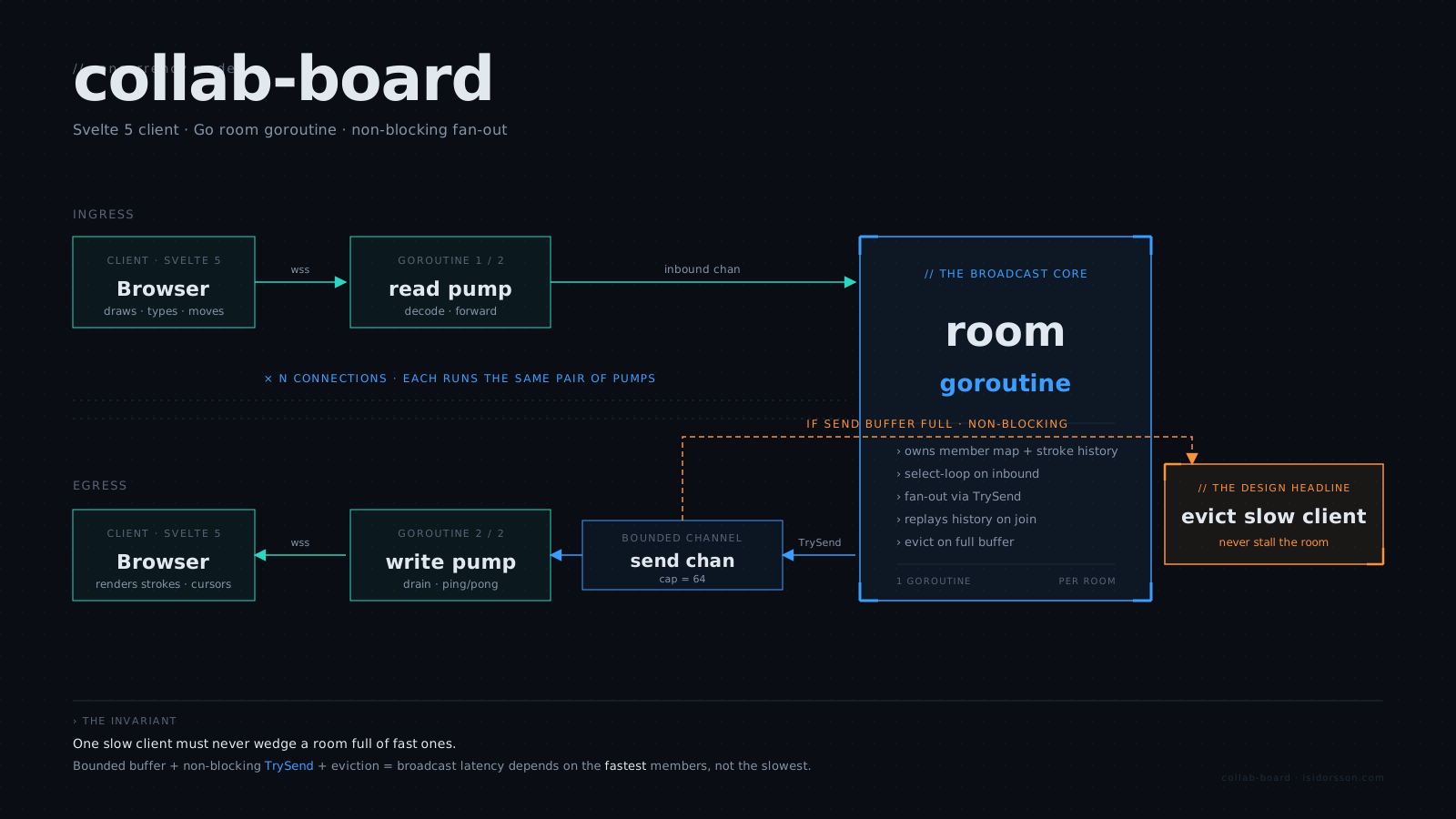
collab-board architecture diagram

A real-time collaborative whiteboard, full stack. Svelte 5 on the front, Go on the back, both shipped as one binary. Pointer-driven canvas with pen and eraser, live cursors with name labels, chat, shareable room links, and snapshots so late joiners see what's already on the board. The backend keeps its concurrency story (bounded send buffers, non-blocking fan-out, explicit eviction of slow clients) under a frontend that earns the same care.

agentforge

Systems Source
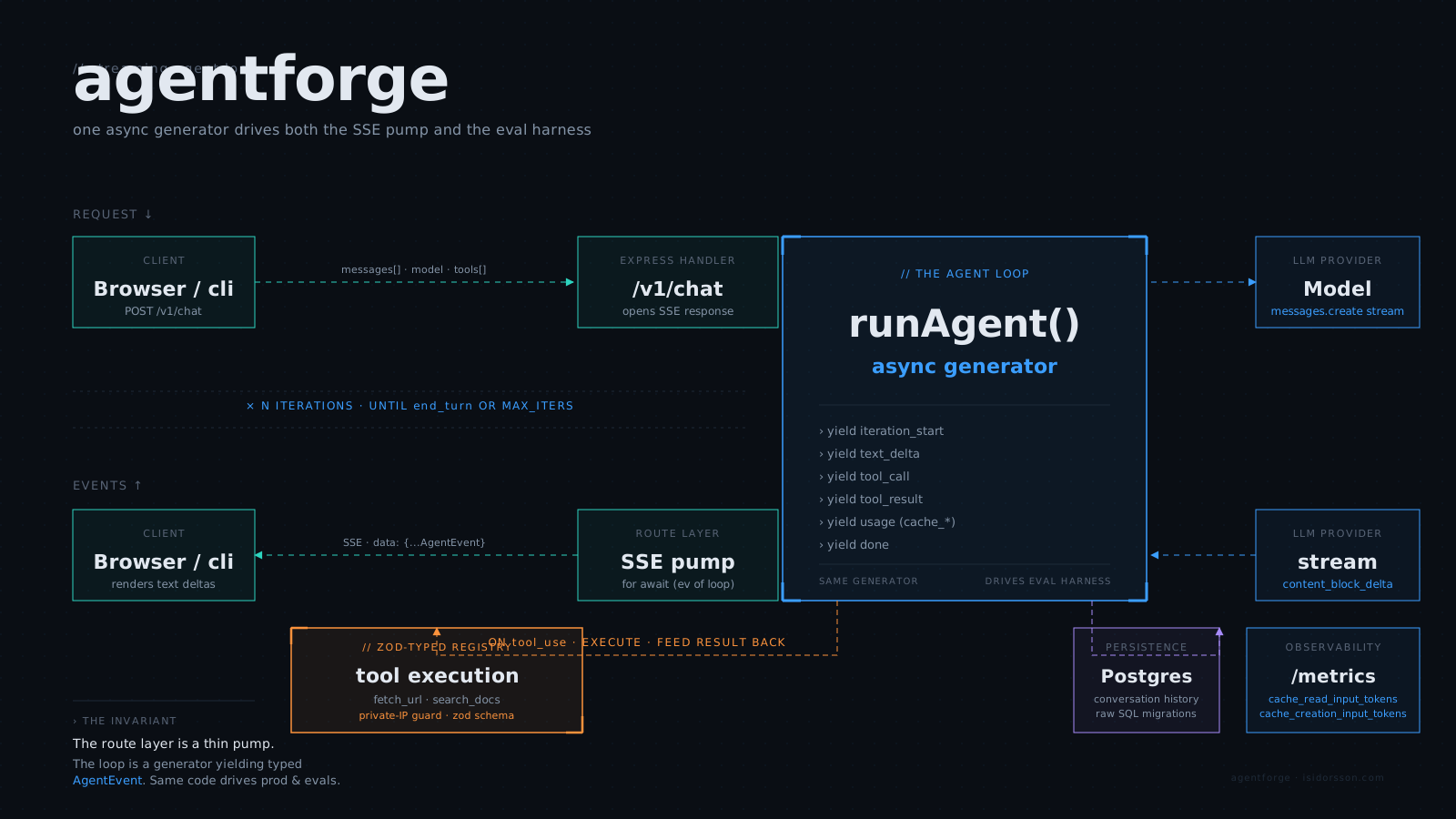
agentforge architecture diagram

An Express + TypeScript service that exposes an LLM-backed agent with streaming, tool use, prompt caching, and an eval harness. The Node-side companion to tinybus and collab-board: same observability shape, different problem domain. Built to demonstrate that I can ship a production-quality Node API with the patterns most agent backends actually need.

node-collab

Systems Live
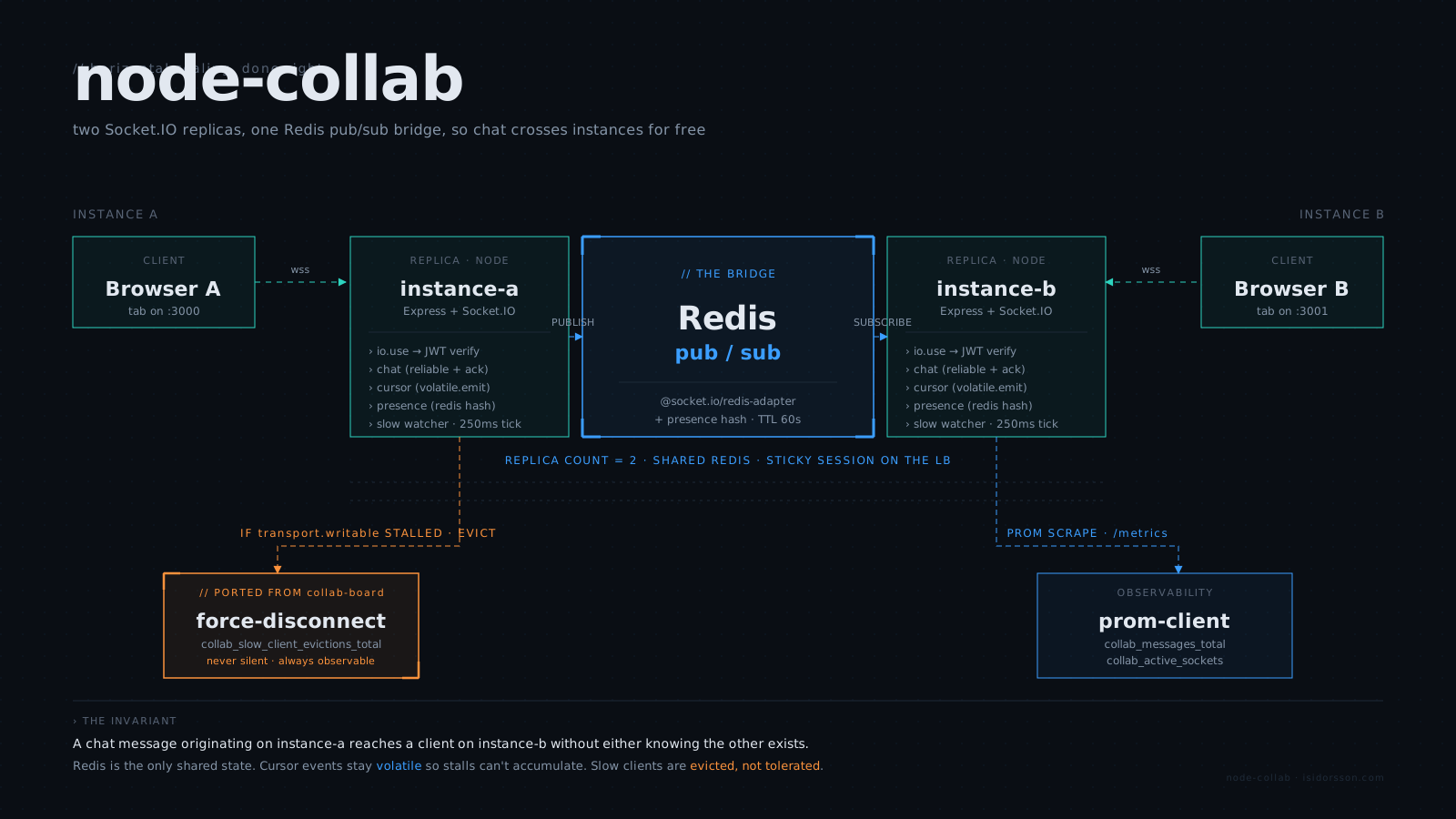
node-collab architecture diagram

A real-time collaborative app: an Angular 20 SPA on top of an Express + Socket.IO + Redis pub/sub backend that scales horizontally. The full Node twin of collab-board, same problem, different ecosystem, deliberately so. Where collab-board is Go + Svelte, this is Node + Angular, all the way down.

Archive · 1 earlier projects, linking straight to GitHub or the demo